
Why Use an Interior Designer to Furnish Your Home?
And what does it look like to work with a designer to purchase your furnishings?
Let’s start with a very normal scenario.
You walk into a furniture store and see a living room vignette you love. The sofa looks great with the chairs. The lamps work with the tables. There’s artwork on the wall, a rug underneath everything, and the whole display feels pulled together.
You could simply say, “I’ll take all of it.”
And there is absolutely nothing wrong with that.
Furniture stores create those displays for exactly that reason, and for plenty of homeowners, that approach works just fine.
But there is another option.
You hire an interior designer to create a room specifically for your home, your lifestyle, your architecture and your taste. The designer develops the plan, sources the furnishings, manages the purchasing and delivery, and ultimately brings the entire room together for you.
So why would someone pay design fees and then purchase the furnishings through their designer?
There are several very good reasons.
1. A More Discerning, Curated Point of View
A furniture store vignette is designed to appeal to a broad audience.
A designer is designing for one person: You!
Instead of selecting everything from one manufacturer or showroom collection, a designer can pull from multiple furniture lines, fabric vendors, artists, rug sources, lighting manufacturers and accessory collections.
That is often what gives a room its collected quality.
The goal is not for everything to match. The goal is for everything to belong together.
Your designer considers proportion, color, texture, shape, contrast, repetition and how each piece relates to everything else in the room.
That artistic eye is one of the biggest differences between simply buying furniture and intentionally designing a room.
Interior designers have access to thousands of furniture, lighting, art, textile and decor vendors that most consumers will never encounter through traditional retail.
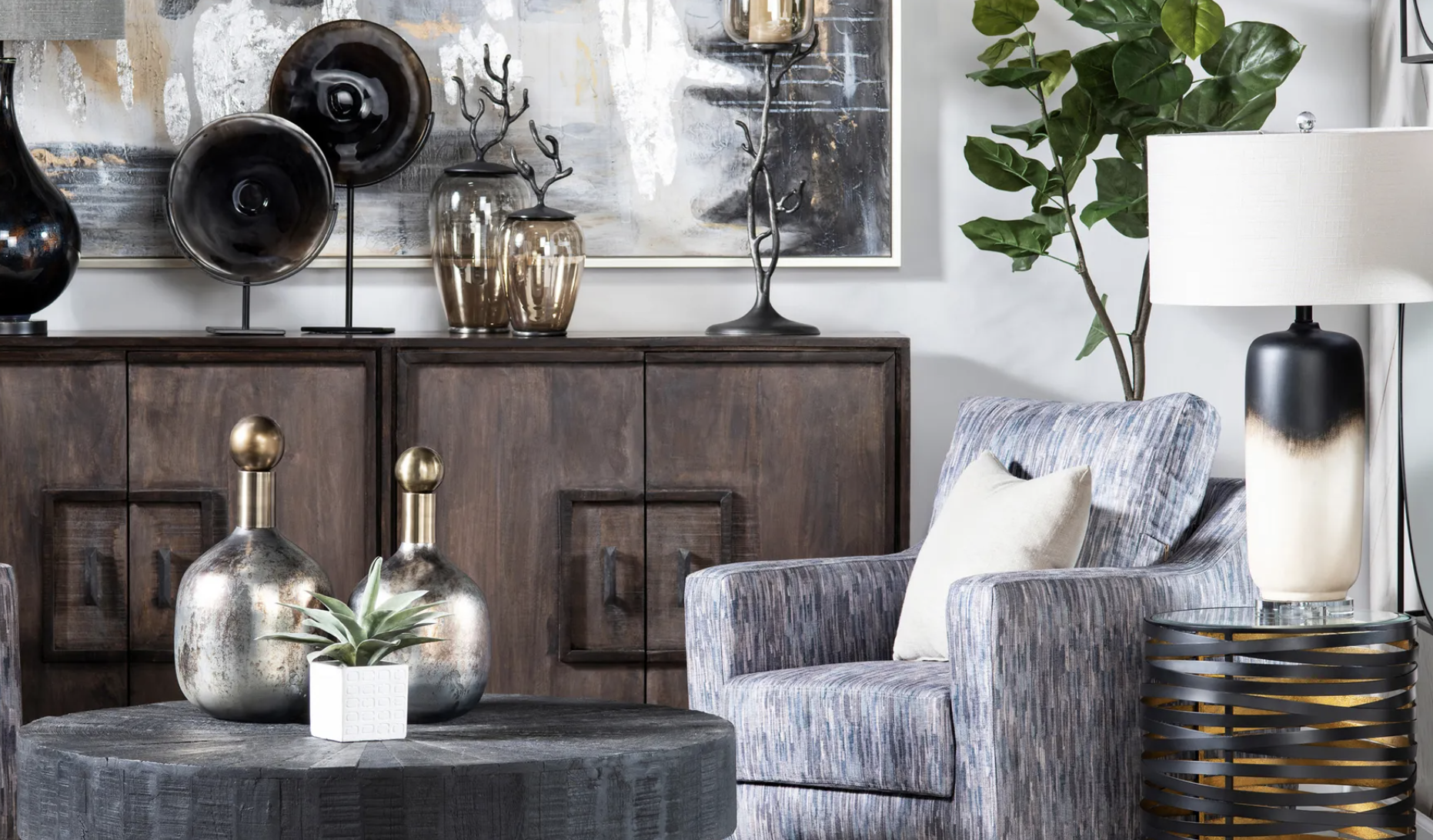
Crestview Collection
That larger sourcing pool gives us the ability to create a home that feels much more bespoke and personal, rather than like a collection of pieces everyone else can easily buy.
2. The Room Is Planned Before the Furniture Is Purchased
When you shop on your own, you become responsible for determining whether the pieces you love will actually work in your home.
Will the sofa fit? Is the sectional going to overwhelm the room? Is there enough space to comfortably walk between the coffee table and seating? Will those swivel chairs block the view?
You get the point!
Those decisions matter just as much as how the furniture looks.
When I design a furnishing plan, I start with the room itself. We measure the space, study traffic flow and determine the furniture layout before any purchasing begins.
It is a much safer way to furnish a home because we are not trying to make random purchases work after the fact.
3. Your Home Is Styled, Not Simply Delivered
A furniture store will typically deliver the furniture you purchased.
Once it arrives, the rest is largely up to you.
You are deciding where everything goes, hanging the artwork, placing the lamps, styling the coffee table, arranging pillows and determining whether the room still needs another table, another piece of art or something else to make it feel complete.
With full-service furnishings, the experience is very different.
The room is installed as a whole.
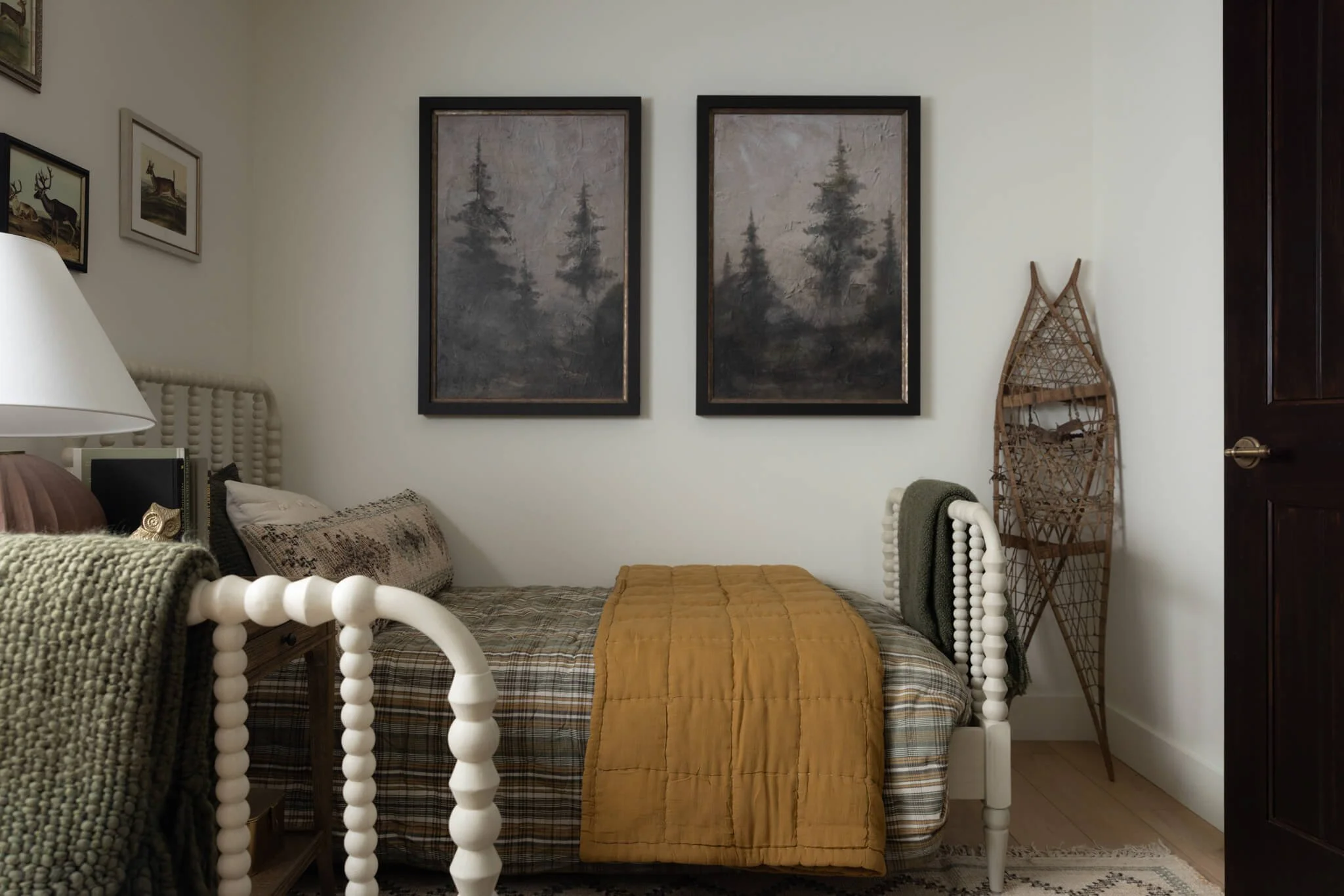
Guest Bedroom Design by MLI
Furniture is placed according to the design plan. Rugs are positioned. Lighting is installed. Artwork is hung. Pillows are arranged. Accessories are styled.
That final layer is often what takes a room from “we bought new furniture” to “this room feels incredible.”
4. The Designer Manages the Logistics
This is especially valuable if you are furnishing a second home.
Furniture projects involve far more logistics than most people realize.
There may be dozens of orders coming from different vendors, with different lead times, freight companies and delivery schedules.
Some pieces may need assembly. Others may arrive damaged and need to be replaced. Accessories may come from several different sources. Rugs, lighting, furniture and artwork may all arrive weeks or months apart.
If you are handling everything yourself, those deliveries have to go somewhere.
You may be shipping items to your primary residence, storing boxes in a garage, hauling things to your mountain home, unpacking them and trying to coordinate furniture deliveries around the times you happen to be in town.
When you work with a full-service designer, much of that happens behind the scenes.
Orders are tracked. Deliveries are coordinated. Furnishings can be received, inspected and stored until everything is ready.
Instead of living through months of boxes and partial deliveries, you get to experience the room when it is ready.
5. You Get the Big Reveal
This may be my favorite part of the entire process.
There is something completely different about walking into a finished home rather than watching it come together piece by piece.
You are not assembling furniture or cutting open boxes.
You are not trying to decide whether the lamp should go on the end table or console.
You simply walk in and see the transformation.
Everything is ready for you to enjoy.
For clients furnishing a second home in the mountains, that level of service can be especially valuable.
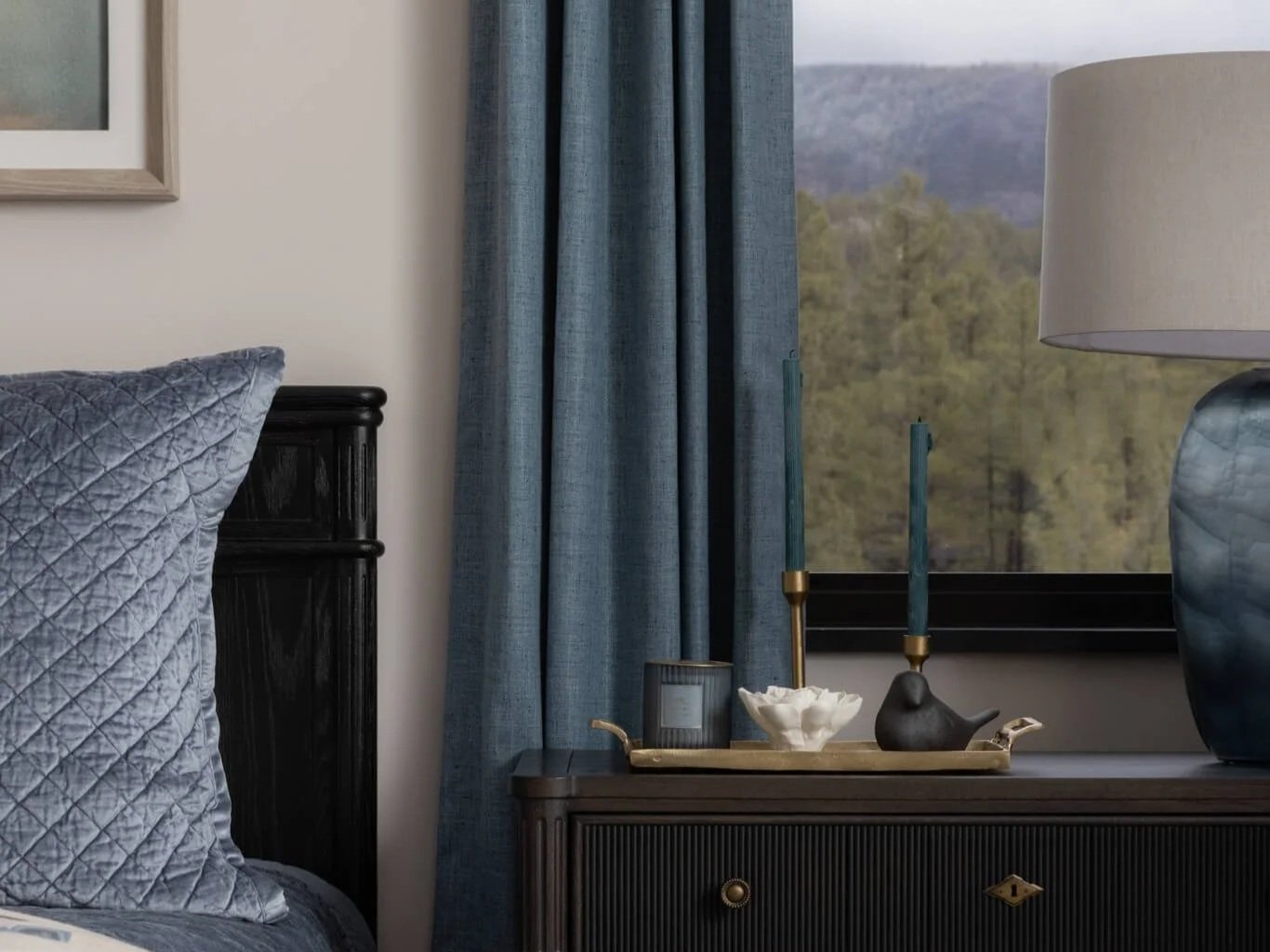
You came here to enjoy your home, your family, and the mountains, not spending your weekends tracking freight shipments and assembling furniture.
So What About Designer Discounts and Furniture Markup?
This is one of the areas of the design industry that can be confusing.
One of the biggest misconceptions is that designers simply receive a “discount” on furniture and decor, and Homeowners sometimes assume that because an interior designer charges a design fee, the designer should also pass along their discount.
Part of the confusion comes from retailers such as Pottery Barn, Crate & Barrel, and others that advertise trade programs to designers and other industry professionals. Those programs often provide a percentage off the regular retail price, usually up to only 20%, depending on the retailer and product.
But that is very different from how most full-service interior designers source furnishings.
As I mentioned earlier, designers typically work with wholesale and trade-only manufacturers that the average consumer cannot purchase from directly. Many of these vendors require established business credentials, resale documentation, and professional trade accounts before they will sell to a designer.
So when your designer sources a sofa, lighting, artwork, or decor through one of these vendors, she is not simply walking into a retail store, getting 20% off, and deciding how much of that “discount” to pass along to you.
She is purchasing through an entirely different sales channel.
Think about your local furniture store with the vignette that caught your eye.
That store purchases merchandise from manufacturers at a trade or wholesale cost and sells it to you at retail.
You would never walk into a furniture store and expect the owner to show you their wholesale invoice and sell the sofa to you at their cost.
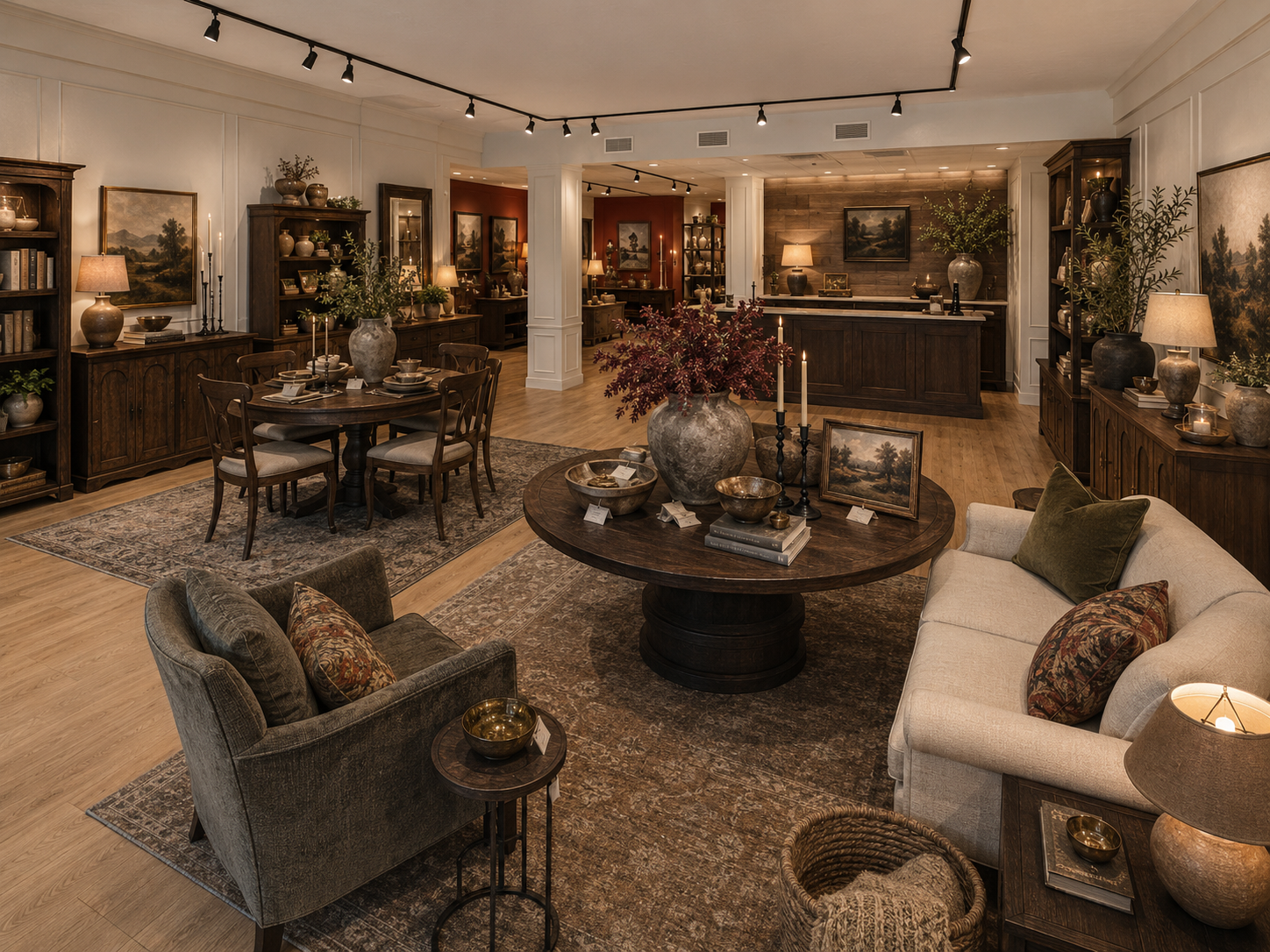
MLI design and AI Rendering of a Furniture Store
Designer-sourced furniture works similarly.
Interior designers purchase through trade-only vendors and manufacturers and then sell those furnishings to their clients according to their own pricing structure.
Every design firm structures its pricing differently. Some sell at full retail. Some price below MSRP. Others use a combination of design fees and product pricing.
The important thing is understanding what is included.
With a full-service designer, you are typically receiving far more than access to a sofa.
You are getting the design itself, sourcing, specification, ordering, order tracking, problem-solving, receiving coordination, installation planning and final styling.
And in many cases, even after the designer’s product pricing is included, the client may still pay less than the manufacturer's suggested retail price.
The Real Question
Hiring an interior designer for furnishings is not simply about gaining access to furniture.
You can buy furniture almost anywhere.
The real value is having someone curate the perfect room for you from beginning to end.
Someone who knows what size sofa belongs in the space, which fabric will work with the rug, and who can pull pieces from different sources and make them feel as though they were always meant to live together.
The result is not simply a furnished house.
It is a home that feels considered, layered, and completely yours.
Until next time,
…be surrounded by beauty!
Christine






Download our latest E-Book with all the deets on renovating a home in the Colorado Rockies!